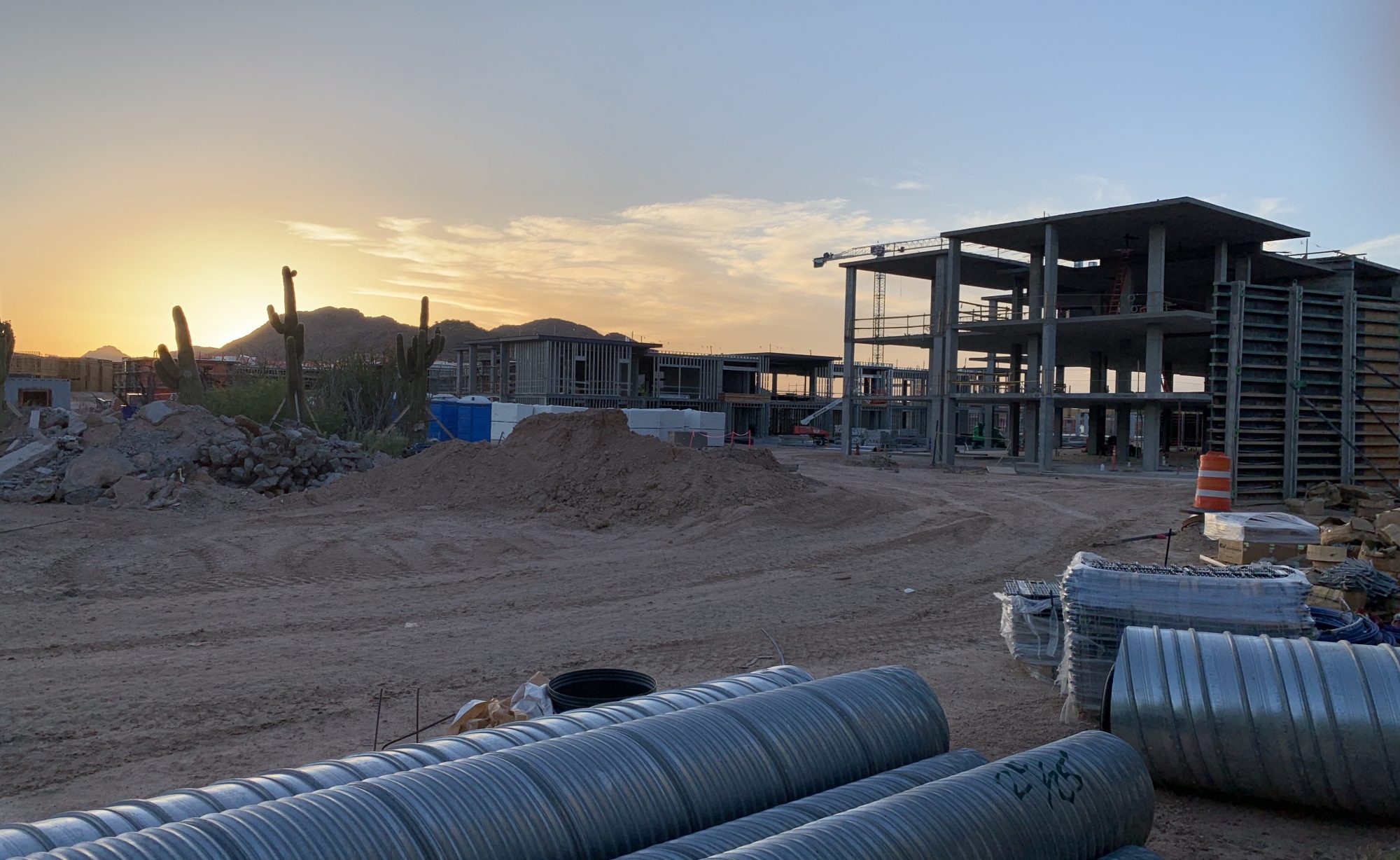
Construction in the Age of COVID-19: Contract Provisions that Merit Review in these Uncertain Times.

Pexels. No attribution required.

The nature and extent of COVID-19’s impacts  on Arizona’s construction industry are currently unknown.  It is, however, certain that there will be impacts.  At the very least, many projects may be delayed.  Thus, in order to prepare for what lies ahead, delay-related provisions in existing construction contracts and contemplated future contracts merit review and consideration. These include, but are not limited to, clauses covering the following:

Contract Time

The starting point for any delay claim is the contract provision specifying the performance period for the subject work.  Typically, construction contracts will establish the performance period by: (1) specifying commencement and completion dates; or (2) setting forth a number of days within which the work must be completed after a notice to proceed is given. read more

Just. Do. It.: Arizona Court of Appeals Holds that Contractor Pursuing a Bid Protest Must Act to Preserve the Status Quo before Contract Performance Begins.

Pexels. No Attribution Required.

Way back in the sixteenth century, Miguel de Cervantes observed that “[d]elay always breeds danger.” In Southwest Fabrication, LLC v. City of Phoenix, the Arizona Court of Appeals recently confirmed that this principle still very much applies to contractors protesting public contract awards.   In particular, the Court held that parties litigating the propriety of an award “must act to preserve the status quo before contract performance begins to avoid [the equitable defense of] laches.”  The protesting contractor in Southwest Fabrication failed to preserve the status quo and, as a result, its bid protest failed.  read more

The Next Chapter: Holden Willits, PLC

I am excited to announce that I have joined a new law firm – Holden Willits, PLC. Holden Willits is ranked by US News & World Report as a Tier 1 law firm in Phoenix for construction law and construction litigation. And as you may be able to tell from this blog, construction law and construction litigation are the main focus of my practice. For this reason and others, I am happy that Holden Willits is the next chapter in my legal career.

While this is a big change for me professionally, it will not change this blog. As new developments relating to Arizona construction law arise, I will continue to write about them. Thank you and stay tuned! read more

“Knowing is Half the Battle” – What to Expect During an OSHA Inspection

Via the United States Department of Labor

G.I. Joe: A Real American Hero was one of my favorite television shows as a kid. Each episode of the cartoon concluded with a character stating that, “Knowing is half the battle.” To this day, I think that is a solid maxim on a number of levels. So, in the spirit of G.I. Joe, I have linked to the video above concerning the OSHA inspection process. The video, which was posted to YouTube by the U.S. Department of Labor on October 17, 2019, details the steps of, and procedures for, OSHA inspections. read more

“Give it 130%” – Threshold at which Preliminary 20-day Notices must be updated is increased from 120% to 130% of estimated total cost.

You often hear of people claiming to give 110% effort.  Whether someone can truly give more than a 100% effort is a philosophical question that is outside the scope of this blog.  Arizona mechanics’ lien laws are, however, something in my wheelhouse.  And, as many of you may know,  120% has historically been an important figure with respect to mechanics’ liens.  This is because Arizona has long provided, and currently provides, claimants with lien rights of up to 120% of the estimated price stated in their preliminary twenty-day notices.  Practically speaking, this means that those looking to preserve their lien rights need not provide additional preliminary notices unless and until the price for the labor and material furnished exceeds 120% of the amount in their original notice.  But with the passing of SB 1304 earlier this year, this threshold for providing additional preliminary notices was increased to 130% of estimated total costs, and this increase applies to all projects where lienable activities are “first commenced to be furnished from and after December 31, 2019.”  As a result, the effects of this change are right around the corner. read more